It’s a Realtek chip and is displayed as a audio unit on PC I believe, from there to implementing and utilizing it though there’s a few other steps but Steam is probably on good way to utilize the DS5 functionality going by the recent updates here.
EDIT: Though I am fairly out of the loop I suppose, speaker output besides just simpler stuff and even camera functionality could probably fit in the hand device by this point not merely the headset or other devices plus it saves on the devices that need to be plugged into the console.
I don’t expect the Feedback on triggers to work and such until PS5 games start getting to PC. But I also wear headphones so I wouldn’t be able to hear the rumble in audio form if that’s what Steam did.
Been updating the bios a bit since AMD started pushing out newer 1.1.0.0 and patch A, B and most recently C updates in addition to ABL for the boot loader and security processor system and overall compatibility improvements.
Saw some 1.1.8.0 bios updates were also coming out having AMD 400 series motherboard support but it looks like this has breaking compatibility issues now with Vermeer / Zen3 CPU’s and there’s going to be a newer 1.1.9.0 beta next year but before that also a Patch D variant of the 1.1.0.0 bios.
The HD rumble of the Dualsense is supposed to be supported in the form audio conversion. You should basically physically feel what you’re hearing through your headphones.
It’s similar to what some Switch games have done to support the Joycons HD rumble, they used audio conversion to rumble - the Dualsense uses more or less the same rumble system as the Joycons, so audio conversion to rumble probably works well. But that’s a huge “probably”, and is what i’m curious about.
I never understood that though… it feels like a poor man’s vibration if it merely converts regular audio into vibrations, instead of having dedicated channels intended for such vibration as your typical force feedback works by.
I had a couple of 5.1 surround headset a decade ago that worked on a similar principle, but it at least converted the subwoofer channel into vibrations since the speakers themselves were too small to reproduce the proper vibrations on their own.
But even then the result was a poor man’s experience, basically.
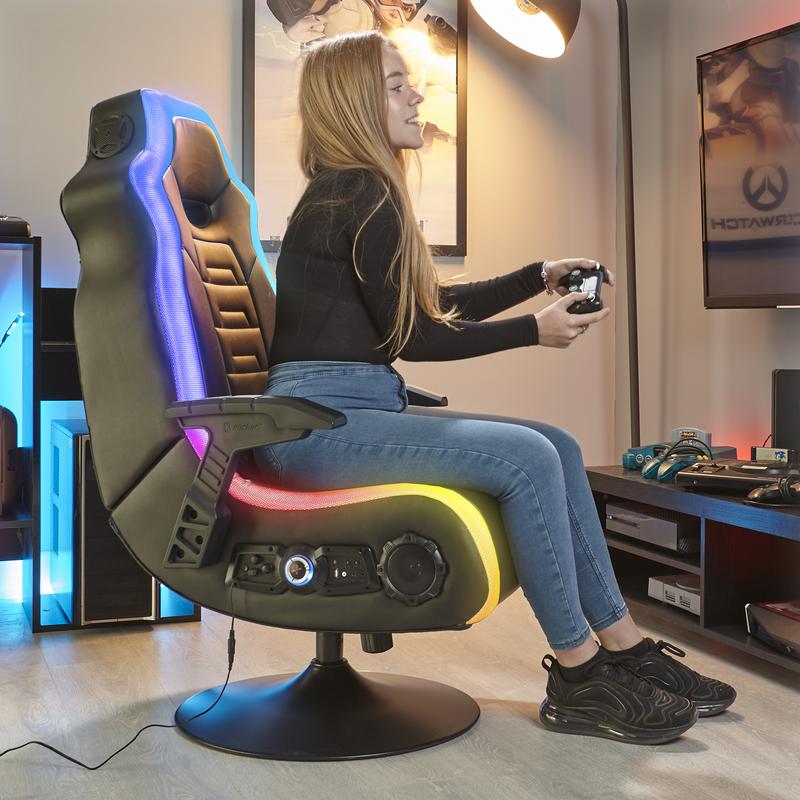
Gaming chairs with built-in vibrations have existed for a few years now that worked on the same principle – take an audio channel (typically the subwoofer channel) and instead of using a speaker to reproduce the vibrations and audio use an actual vibration driver (or whatever they’re called) and create vibrations from it – often a bit exaggerated so that the buyer thinks the purchase was worth it.
If that’s all DualSense’s “HD rumble” (or whatever they call it) actually is about then I can’t help but be let down. The way people speak of it makes it sound much more impressive than it would be.
It doesn’t require audio conversion, audio conversion is just a shortcut and the easy way to make PC games compatible with the dualsense rumble. It’s likely some devs will use the same technique to get rumble done and out of the way quickly for PS5 games, which is the case with some Switch titles.
Some games will definitely use the dualsense rumble properly (on PS5), which is where it can actually shine. Afaik the preinstalled Astro game is already a great showcase for the HD rumble.
I can sorta understand Logitech experimenting with this way back with the haptic mouse and hand feedback and responsiveness even if it was fairly crude back then.
I’m having a bit tougher time with understanding why the arse needs feedback though jamming a similar system into a chair seat.
“Now there’s a funny feeling, must be low on health.”
Suppose normal design is to put it in the back though, must be a real conflict there every time they design a new model where the audio unit has to go versus where it would go if they were allowed to.
EDIT: Well I was wrong, it goes exactly where it goes.
Yeah, there’s even guides of setting up a similar custom setup on chairs without it built-in.
From what I’ve heard, it’s the Nordic countries and a few other ones that are the exception and not the norm. Or at least that’s what popular culture and social media have taught me – everyone runs around with their shoes on when indoor.
Yeah the Nordic countries and parts of Asia versus the rest of the world ha ha.
Could be the terrain around here though, don’t want to drag that stuff through yours or someone else’s house.
Ha, my mom’s bf always wears some sort of flats or something in our house. But I refuse to wear any kind of shoes in our house. I just walk around barefoot. lol.
Gameboy Rumble, in other words I think MadCatz invented that, they just tap into the headphone jack on Gameboy to add vibration. They brought a peripherial that does the same thing back for the new Nintendo Switch iteration that lacks support for it.
It’s possible. That’s how the HDR stuff works, except I don’t stop at 10-bit color. It’s usually 8-bit or 10-bit → 16-bit with the HDR override. It’s an important override for HDR, so that’s all been pretty well tested.
8-bit to 10-bit for other reasons has not been tested.
Seems Yakuza Like a Dragon does good with PS5 controller. And damn that rumble is fierce and far more noticeable than my PS4 controller. Loving it so far. It seems the inputs from controller are basically instant now with PS5 controller. Seems much faster response and easier to move and such.
I am referring to I guess the input lag is much less now with PS5 controller. It seems like that I mean.
Good news is that Yakuza Like A Dragon also uses Sony Controller prompts. So it still uses touchpad for map and settings and such. So definitely working nicely. Haven’t tested other games though.
Edit: PS5 controller is definitely a bit bigger than I am used to actually. So gotta get more reaquinted to the controller size and be able to hit buttons more precisely lol.
I would presume the reason ReShade attempted some form of 10-bit back buffer override was for dithering and banding when using 8-bit though I can’t imagine it’s something you’d want to set to this one format in such a method as to how that seems to be handling it.
Curious though as it’d be interesting if there were legitimate uses or benefits from it but I’m assuming that for SpecialK these are entirely HDR related and it won’t be too useful or look right without this part.
In my case no. It makes it look horrible actually and pixelated. Definitely want the 8bit to 16 bit one.
Actually most effects in ReShade don’t play nicely at all with HDR mode in SK. Not a good idea to mix them actually. Causes a ton of glitches and such.